Why the Pelvic Floor NEEDS to Be Part of Your Bracing Strategy

The pelvic floor is often thought of as only an issue for women who have just given birth, and even then is often neglected.
I’m here to tell you it’s something we ALL need to be paying attention to- regardless of gender or pregnancy history.

First and foremost, we all have pelvic floors, and its role in our bodies is far more expansive than holding in your pee when you gotta go real bad. The pelvic floor is part of your core canister, and your core canister is responsible for building stability for the rest of our bodies when we move. The pelvic floor is ALSO responsible for helping you build intra-abdominal pressure (IAP) when you lift. This is where it gets REALLY important for you, even if you don’t have classic pelvic floor symptoms when you lift.
Specifically, the pelvic floor has muscular overlap with a lot of hip and core muscles. The piriformis and obturator internus both sit in layer 3 (the deep layer) of the pelvic floor and they both also rotate the hip and contribute to hip stabilization with exercise. This is why when clients come to see me for hip pain that hasn’t gone away and they’ve tried PT before, the FIRST place I look is the pelvic floor. Additionally, the psoas, rectus abdominus, and transversus abdominus also tend to contribute to pelvic floor disfunction. Some people develop pelvic floor dysfunction after back injuries because it disrupts the ability of the core muscles to work correctly.
If the pelvic floor is not playing its part, the other muscles will compensate and take over for it. This results in injury of the muscles taking over and doing too much, just like any other body part.
IAP is the key to a strong brace when you lift. It increases with a big breath in, holding your breath, heavier weights, and/or muscle activation, and we usually use this as a tool to keep your back safe when we lift weights.
This is a tool that occurs naturally in the body, whether you’re lifting a barbell or a Costco-sized case of water bottles. But sometimes people learn to brace incorrectly or an injury disrupts the regular muscle activation, and instead of your natural brace we adjust to something else.
The most common issues I see here are:
A lifter is taught to bear down to brace
A back or hip injury disrupts the muscle activation, and now they are having trouble coordinating a brace
Bearing Down:
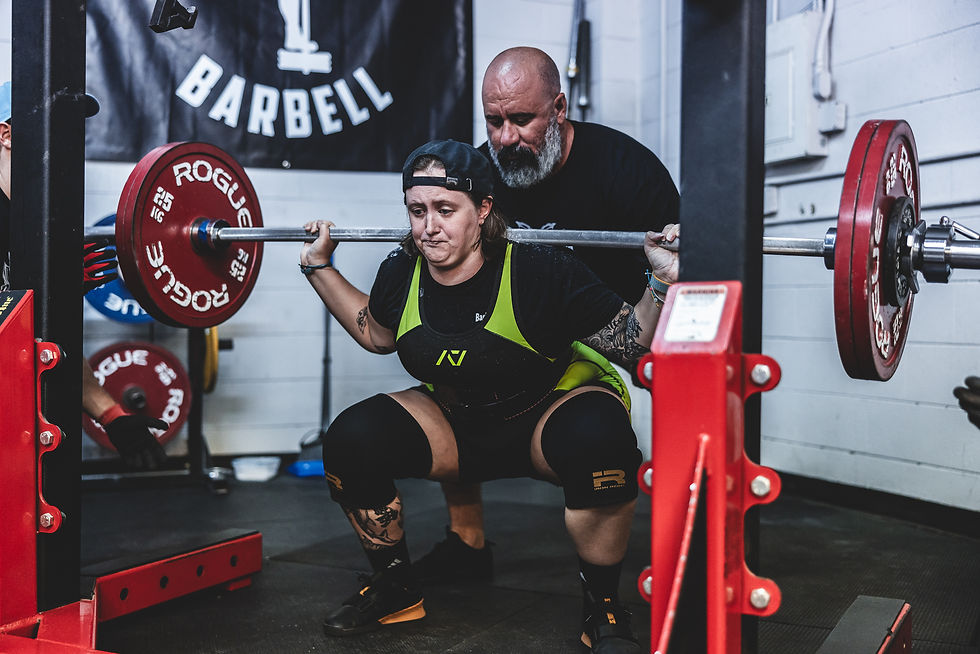
When we take all the pressure built when performing a 1RM lift, and direct ALL of that pressure down to the pelvic floor, we are asking an undertrained muscle group to support far more than it is capable of. I mean it when I say this- all the kegals in the world cannot save you here, and you are setting yourself up for a hernia, hemorrhoids, and/or incontinence if you continue bracing in this way. A strong brace is meant to disperse pressure 360 degrees around the WHOLE core.
If all the pressure is directed down, that brace designed to protect your back is no longer doing its job, and is setting you up for higher injury risk in the future.
An Uncoordinated Brace:
Sometimes after an injury, we have a disruption of the core muscles where your core errs to a different way of bracing immediately after the injury, and your body never re-adjusts after the injury is healed. If you’ve had ANY injury before, and come to see me for it, I’m sure we discussed compensation patterns a lot, and this is the way back injuries tend to compensate.
Instead of your core muscles coordinating a light squeeze in to support the IAP, they do nothing, so you bulge out through your lower abdominal muscles. Again, this is setting you up for the same injury risk as above, skewed slightly more towards abdominal hernias.
This is why we’ve all met an older guy at the gym who hurt his back deadlifting, then got a hernia a few years later (maybe has had a few since), and now he tells everyone lifting heavy is too dangerous and isn’t worth the risk.
He didn’t have the knowledge we do now, and he didn’t have access to fix his core bracing strategy after that initial injury. Fortunately, you do!! So instead of ending up like him, when you’re the old person in the gym, you can just cheer on the younger generation without making them feel weird about it.
If you workout in any capacity, and ESPECIALLY if you’re lifting weights, you need to be utilizing your pelvic floor in your bracing strategy, and also making sure your pelvic floor isn’t over burdened because of your bracing strategy. Not only will this help you reduce your risk of gym related injuries, but it will also help you create a stronger brace to lift more weights!
Interested in learning more about how to utilize your pelvic floor in your brace? Let’s chat! Click here to schedule your session or a free call to learn more!


Comments