How To Keep Joints Healthy as You Age

As a physical therapist, this seems to be the question everyone wants an answer to. As much as I wish there was one simple supplement you could take, the answer is a lot more nuanced (and active) than most people want it to be.
To understand how to keep joints healthy, we first need to understand how joints and the cartilage that protects them work. For our purpose here today, we’ll be discussing synovial joints, as these are the ones that allow movement and are the ones you all want to WD-40 when things get stiff.
All synovial joints have 3 main features:
Articular capsule with a synovial membrane
Synovial cavity with synovial fluid
Hyaline articular cartilage
When you move a joint under load, the two bones on each side of the joint roll and glide over each other. This results in one section of the joint being compressed, and the rest is of the surface is not. This is important for how joints get their nutrition.
The compression squeezes out waste product from that specific section of the articular cartilage, while the rest is able to absorb new nutrients and lubrication from the synovial fluid around it. (PMID: 2383080)
This of it like a sponge. If you have a dirty sponge, and you put it in clean water, and you don’t squeeze it out at all, that sponge is just as dirty as it was before. If you take that same sponge, but you only pinch 1 spot of the sponge while it’s in clean water, your sponge will still be pretty gross. But. If you take that same dirty sponge, FULLY squeeze it out a few times, THEN you will have a much cleaner sponge to finish the cleaning.
Same is true of your joints.
If you only move through partial range of motion, you’re not able to clear waste products from all of the sections of your joint. If there’s no compression (load from weight bearing), you’re not squeezing out the waste products to make room for new nutrients. But if you move through full range of motion AND you’re loading it with weights? You’re going to have some super healthy joints that will keep you moving for years to come.
This is why I make sure all of my clients are training through their full range of motion WITH load.
So, we’re back to our original question:
How do you keep joints healthy as you age?
Moving through full range of motion with weights or weight bearing exercises.
It’s simple. It’s boring. And there’s no magic supplement to replace it (I know, I’m sorry!! Don’t shoot the messenger!!)
Looking for ideas on exercises that will help you accomplish your goals?
You know I won’t leave you guessing!!
Full Range of Motion Exercises to Add to Your Gym Routine:
Upper Body:
Plank Sit Throughs
Overhead Press
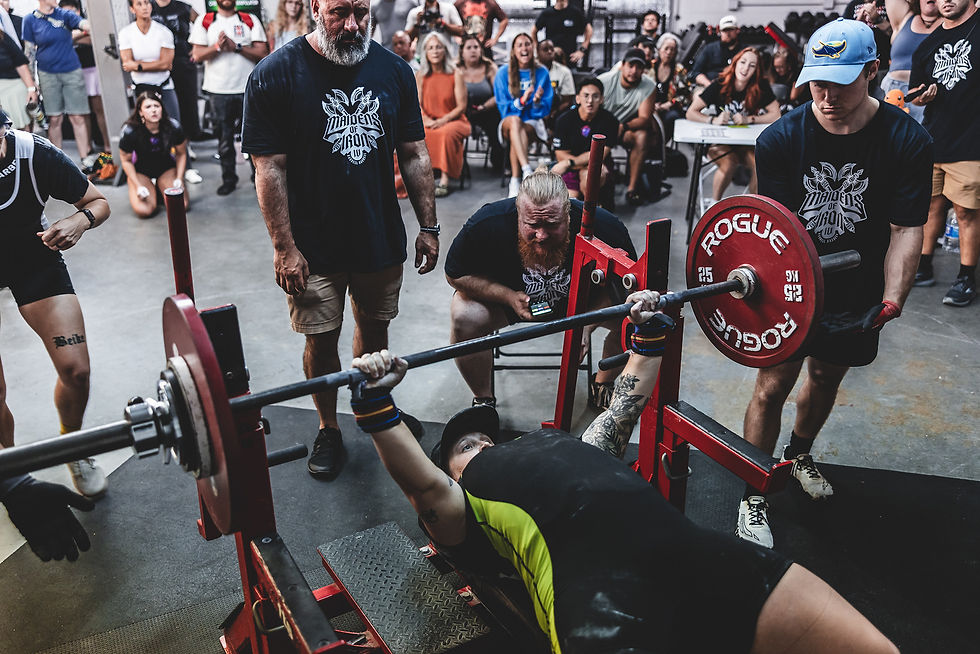
Bench Press
Lateral Raises
Shoulder Internal and External Rotation (90/90 position, elbow at side, front rack position… variety is the spice of life!!)
Lower Body:
Squats (full range of motion… how low can you go??)
Hip Airplanes
Hip Adduction and Abduction
Duck Walks
Hip Internal and External Rotation
Full Body:
Turkish Get Up
Side Planks
Deadlifts
This list is by no means exhaustive, but should give you a good idea of a place to start.
How Often Should You Do These?
First and foremost, I don’t need you to take this exercise list and make it your gym program forever. I’ve said it once, I’ll say it again- variety is the spice of life.
These are all things to keep regular in your gym rotation, but not all of them necessarily need to be done all the time.
For example, I might focus on hip and shoulder rotation one month, then hip and shoulder adduction and abduction the next. This keeps training fresh, but also makes sure I don’t miss training anything for too long.
Are there ANY supplements??
Turmeric extracts have been shown to decrease knee inflammation (PMID: 32749918).
40mg of undenatured collagen daily improved knee joint range of motion in healthy adults (PMID: 35377244).
And honestly? I’m sure you could find a few research articles to support some others.
But none of them, and I mean none of them, are going to touch what moving your body through full range of motion will do to protect and heal your cartilage.
Supplements are taking buckets of water out of a sinking boat.
Full range of motion lifting is making sure the boat doesn’t have a leak.
But wait- isn’t lifting heavy BAD for your joints?
NO.
Wait, wait, wait. Let me guess who told you this.
It was the old guy in your gym, been lifting longer than you’ve been alive (and will remind you about that), who can’t lift his arms straight overhead and talks about how squats ruined his knees and deadlifts ruined his back.
And you know what? Maybe that’s his truth. I wasn’t there to comment on the incident. But I’ll tell you what’s more likely:
He was lifting with the boys. The energy was high. Everything felt like light weight. The boys felt good. They decided it was a great day to test a new max. Form broke down. A muscle was tweaked. Maybe even a muscle was torn.
Things weren’t the same. Physical therapy 40 years ago was nowhere near what it is today. Doctors blamed lifting heavy for everything, so that’s what they told him, and that’s what he’s telling you.
But we know MORE now. We’ve done the research. And you know what?
The science shows lifting heavy protects joints and their cartilage. In elite weightlifters, knee cartilage was thicker, indicating functional adaptation to stress and load from lifting (PMID: 24648385).
Ask your older relatives who complain about bone-on-bone arthritis if they’d like to have had thicker cartilage before the arthritis set in.
So to recap:
You need to be loading ALL of your joints through full range of motion.
Lifting heavy can help protect your joint cartilage from future degeneration
There’s no magic pill to fix your joints.


Comments